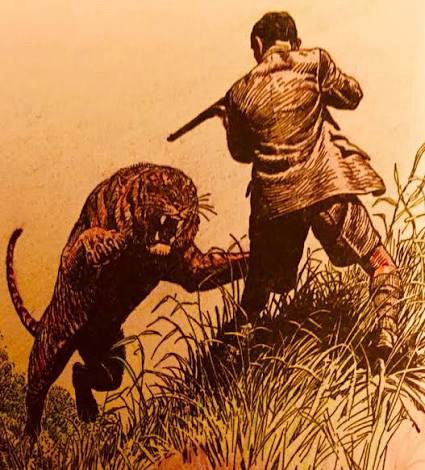
I lent forward and with a great good luck managed to put the remaining bullet in the rifle into the hollow where her neck joined her shoulder. The impact of the heavy 500 bullet deflected her just sufficiently for her to miss my left shoulder, and her impetus carried her over the fifty-foot drop into the stream below,where she landed with a great splash. Taking a step forward I looked over the edge and saw the tigress lying submerged in a pool with her feet in the air, while the water in the pool reddened with her blood. ( Jim Corbett, The Muktesar Man-Eater)
Born in 1875 Jim Corbett was one of 16 children with some being half siblings which he was put to the task of taking care of when he came of age. He spent the majority of his childhood exploring the wilds of India gathering extensive knowledge and experience with the natural world, its sights,smells,sounds and the animal life that lived there. Jim served in both World Wars, he tried to enlist in 1914 but was initially denied due to him being 38 but as the war went on he was commissioned as a captain over the 70th Kumaon Company and saw action on the Western Front. At the end of the war in 1918 Jim was promoted to the rank of Major, he was also called upon in 1919 to serve in the Third Anglo-Afghan War. When World War 2 broke out Jim would enlist again but was rejected again because at this point in his life he was over 60 years old, he worked instead for a charity looking after families of active service members and became a recruitment officer after lying about his age. While recovering from a Typhus infection between 1942-43 Japan had begun their push into Burma and the jungles of South-East Asia he was approached by the Army and was appointed to senior jungle craft instructor due to his immense knowledge of how to survive,track and navigate the jungles, the British and American troops that trained under him were highly impressed and in awe of Jim’s ability’s and would say of him that he was a cross between a magician and a master detective.
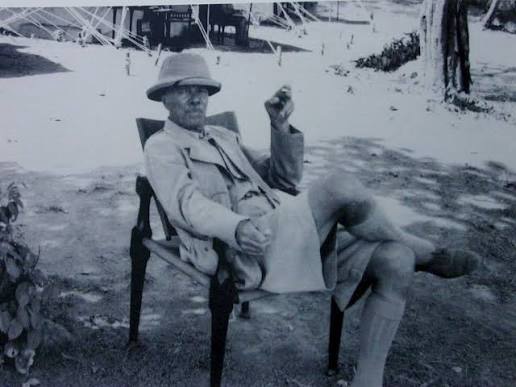
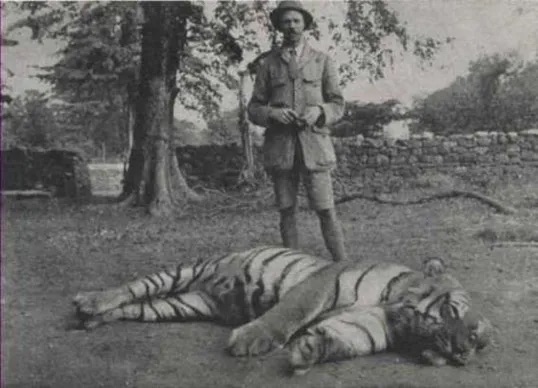
Jim’s career of dispatching man-eaters started in 1907 with the killing of the Champawat tigress which killed over 400 people, his tally of man-eaters through the years was 31 tigers and 2 leopards, he shot his last tiger in 1938 that being the Thak man-eater. His love of India ,its wildlife and its people spurred his desire to help others in need, he would often walk days to reach a secluded village in need of dire help to stop the demons terrorizing them.
Jim would sell his home and move from India to East Africa in 1947. Jim’s years in Africa were spent fishing,traveling and entertaining high ranking British officials. With the deforestation and over shooting in India a major problem, Jim in his later life would be instrumental in the conservation movement in India helping establish one of the first National Parks in 1934 ,it was renamed the Jim Corbett National Park in 1957.
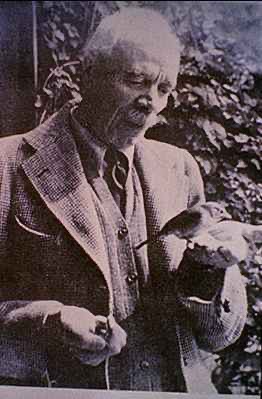
Years of sleeping in the rain and suffering from various bouts of pneumonia and tropical diseases left Jim weak in his later years. April 19th 1955 Jim would suffer a massive heart attack early that day and would sadly pass away that evening at the age of 79. Jim never married or had children but his sister Maggie was by his side the whole time,his last words to her were {Always be brave and, try to make the world a happier place for others}. Jim’s life was a testament to courage,diligence and love for others in need. He stands out as one of the greatest humanitarians,hunters and conservationist of the 20th century. The words on his tomb stone read as thus
UNTIL THE DAY BREAK AND THE SHADOWS FLEE AWAY
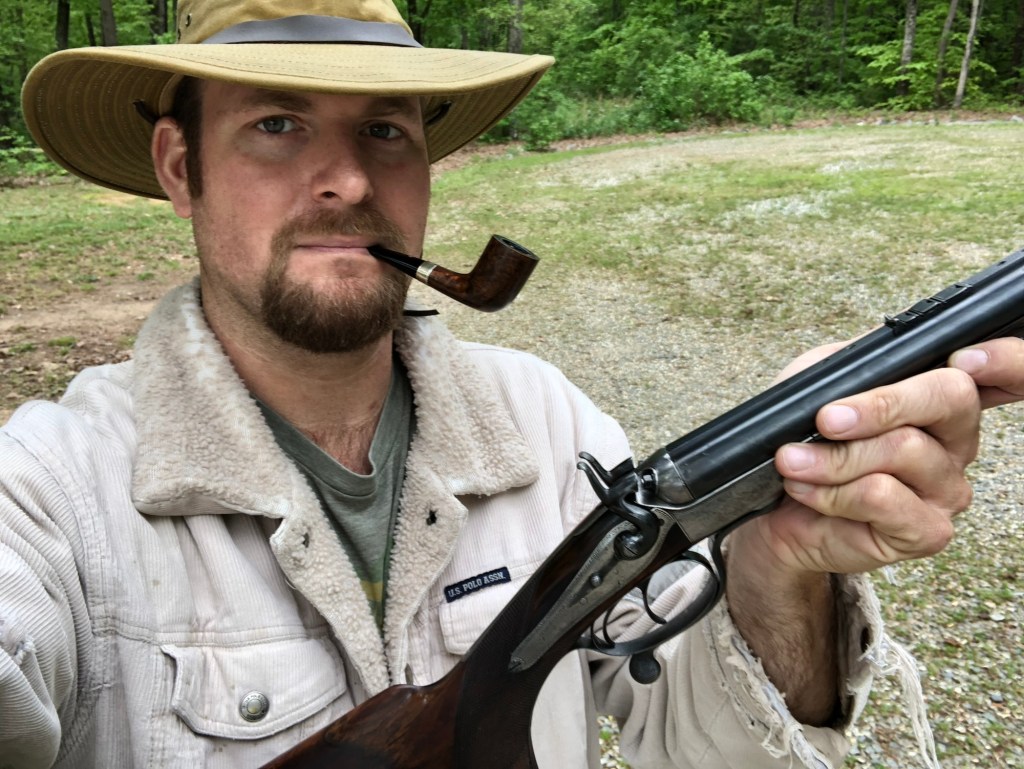
Fascination with far away places and vintage firearms lead me down the path in my late teens early twenties to desperately want to acquire a double rifle. Reading Jim Corbett’s accounts of braving the wilds of India in search of man-eating tigers and leopards didn’t help in quelling my obsession. So determined I set out on my quest, First what rifle did I want? Well something affordable…. I know those words don’t come into play when talking English double rifles! Well at any rate I knew I wanted something in the lines of what Jim had either a 450-400 NE or a 500 Black Powder Express Jones under lever hammer rifle.The Black Power Express hammer doubles are for the most part on the (cheaper) side of doubles rather than the Nitro Express hammerless doubles. At a local gun show of all places an old gentleman was walking around with a Jones under lever Thomas Mortimer and Son 500 Black Powder Express complete with loading dies and brass for a heck of a deal! So I walked away with my new rifle a very happy camper!
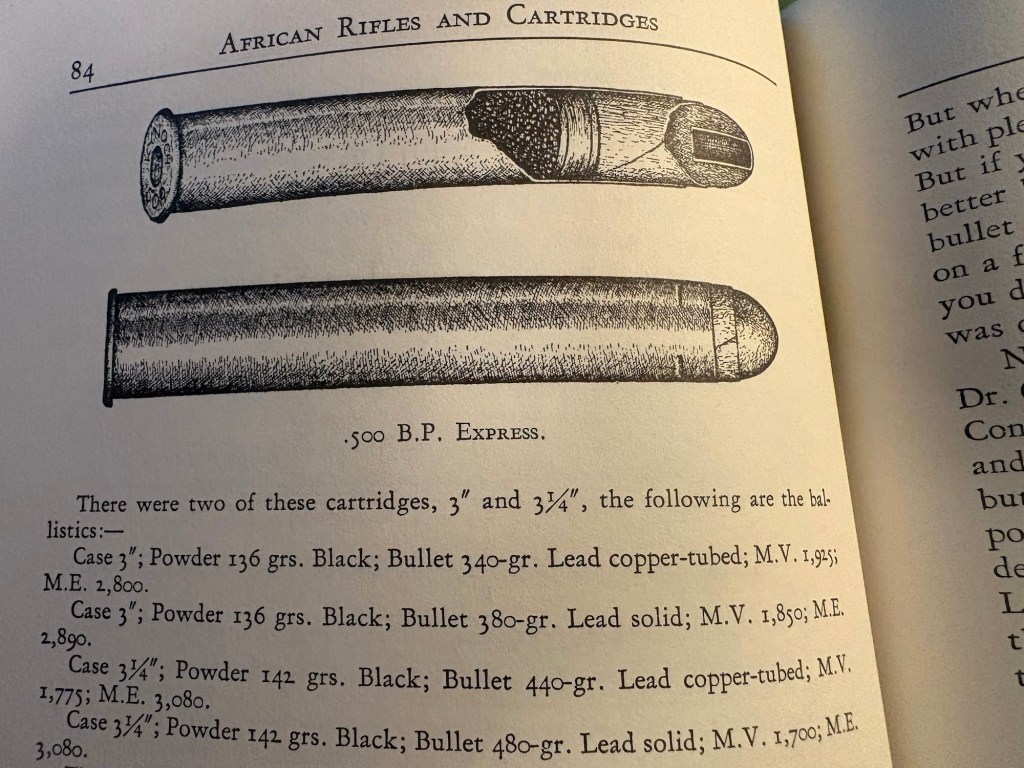
The 500 Black Powder Express was introduced around the early 1860’s with a 3 inch and 3 1\4 inch case, of the two the 3 inch case proved more popular and is the base for the 500-465 Nitro ,470 Nitro and 500 Nitro Express cartridges. Popular in India for soft skinned animals and tigers it was not very popular in Africa on dangerous game until it was introduced in the 1890’s loaded with 80 grains of cordite and a 570 grain bullet running 2’150fps with 5’850 foot pounds of energy turning it into an elephant stopper. Jim’s 500 was a Nitro for Black Express which means it was not a full nitro rifle but was loaded with 55 grains of cordite and a 440 grain bullet running around 1’800-1’900 fps giving it around 3’500 foot pounds of energy.
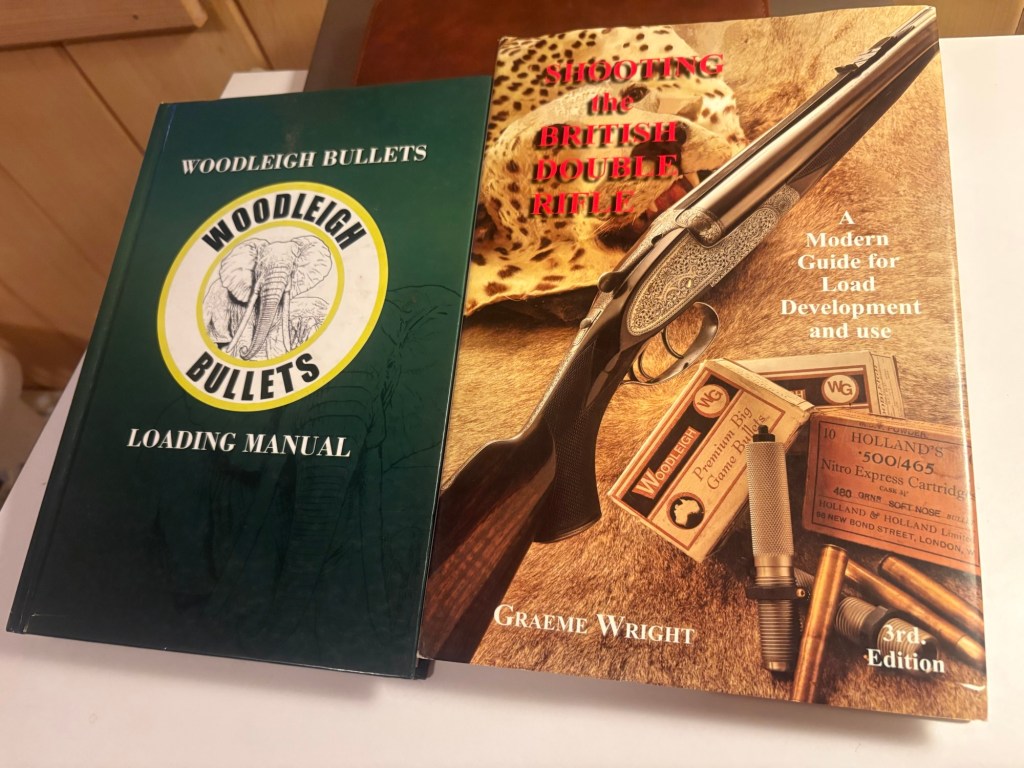
So now that I had the rifle I needed some ammo, getting the brass and reloading dies in the deal I set out to gather some books on reloading data. Graeme Wright’s 3rd edition of Shooting the British Double Rifle and the Woodleigh Bullets Loading Manual hold a wealth of knowledge in the double rifle reloading department, especially if you are looking to reload nitro for black, which his what I wanted to do with the 500.
Cross-Referencing Graeme’s book with Woodleigh’s I came up with a couple of nitro for black loads. Graeme suggest’s using medium burning rate powders IMR and Hogdons 4891,4895 and Varget.
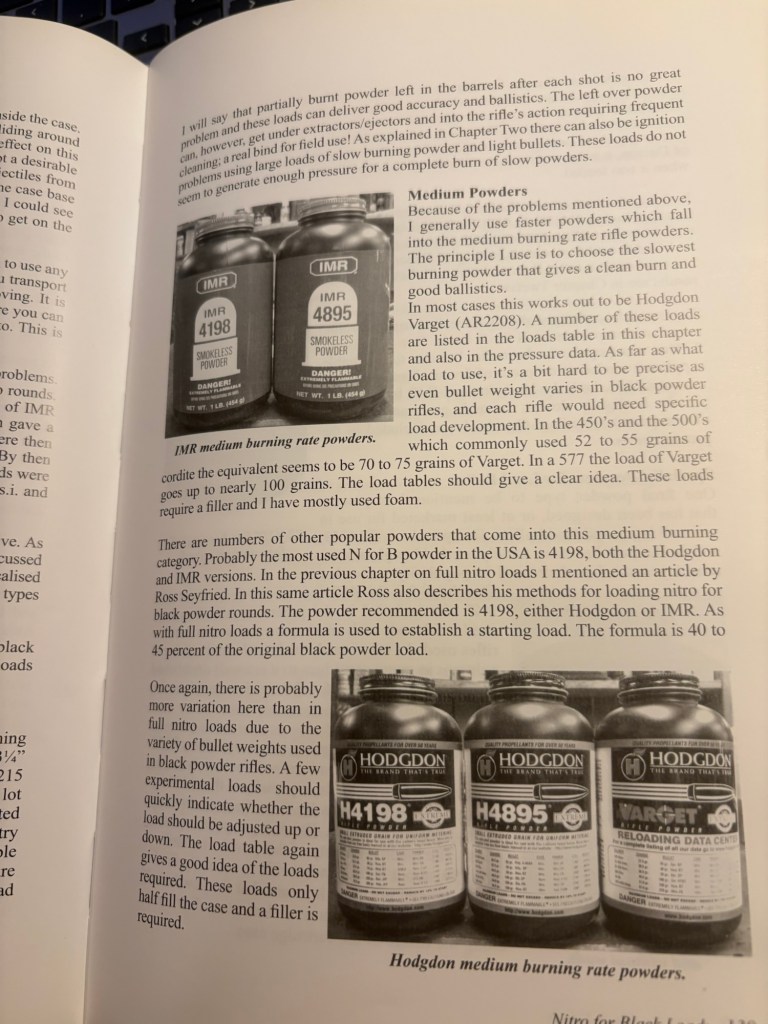
The first load was Woodleigh’s 440 grain bullet over 51 grains of 4198 and 6 grains of cotton [to keep the powder against the primer] Graeme goes over this in his book. With that load I was getting 1’700fps and 2 inch groups at 50 yards. The next load I bumped up gradually to 56 grains of IMR 4198 and 5 grains of filler which gave me 1’850fps and 3 inch groups at 50 yards. Of the two I settled with the 51 grains of IMR.
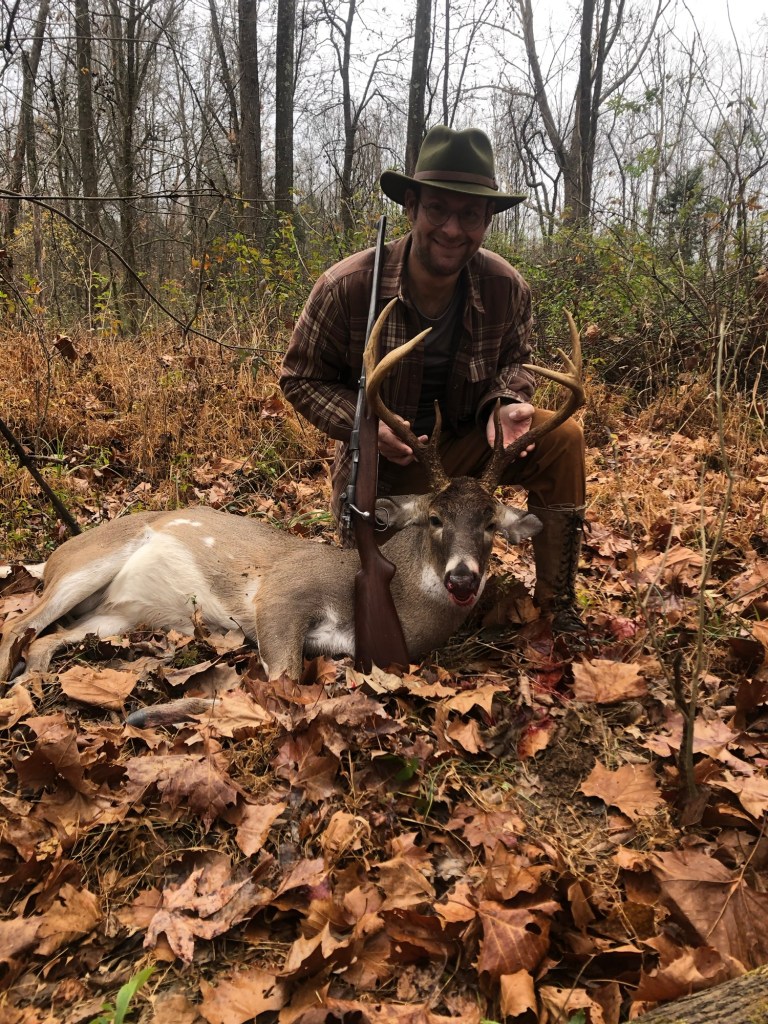
So settling on a load I would set out on the back 40 of my North Carolina farm on occasion to try and track down the very dangerous and elusive white-tailed deer we have stalking around here.
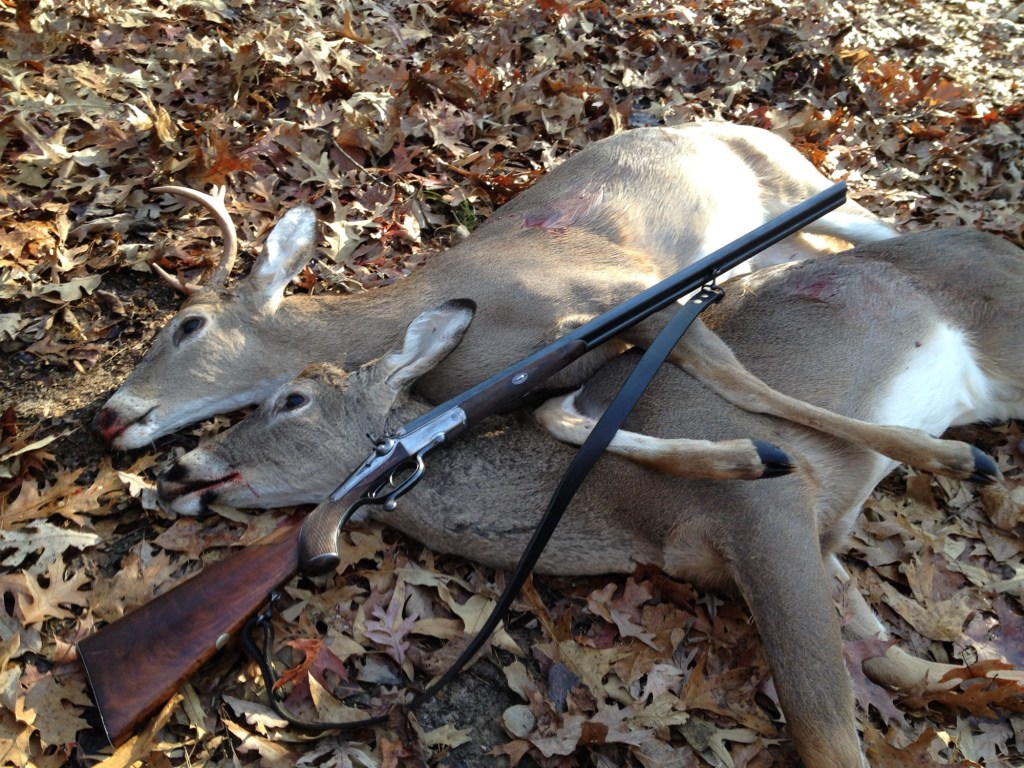
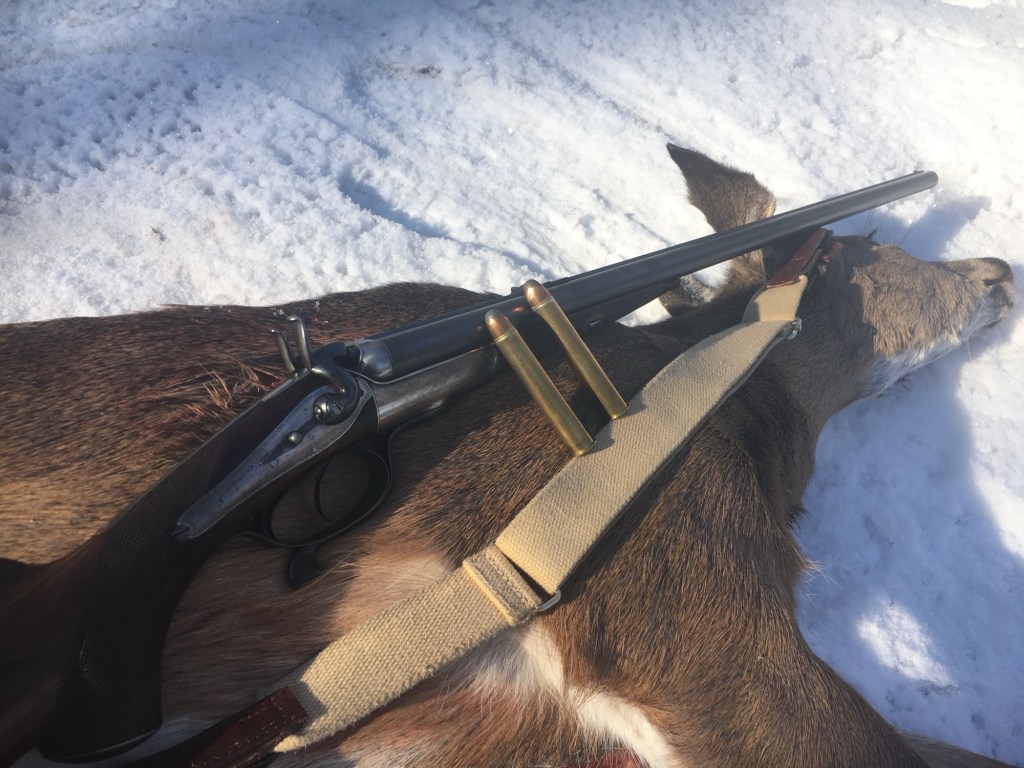
Though I never got to use the old tiger rifle on anything other than white-tails,I did take it pig hunting a few times to no avail. The old tiger killer has since passed on unto another caretaker to pursue their dreams of far away places and adventure, my only hope and wish is that the old warrior will see many more sunrises afield and speak its might song to the four winds.